A Cranfield University team designing a next-generation emergency response flyer is one of the Stage Two Prototype winners of a global competition.
The CraneAERO team, made up of staff, students and researchers, is one of only eight Stage Two winners in the GoAero Challenge - selected from 1,800 innovators from across 85 countries – and is the only UK team progressing to the next phase.
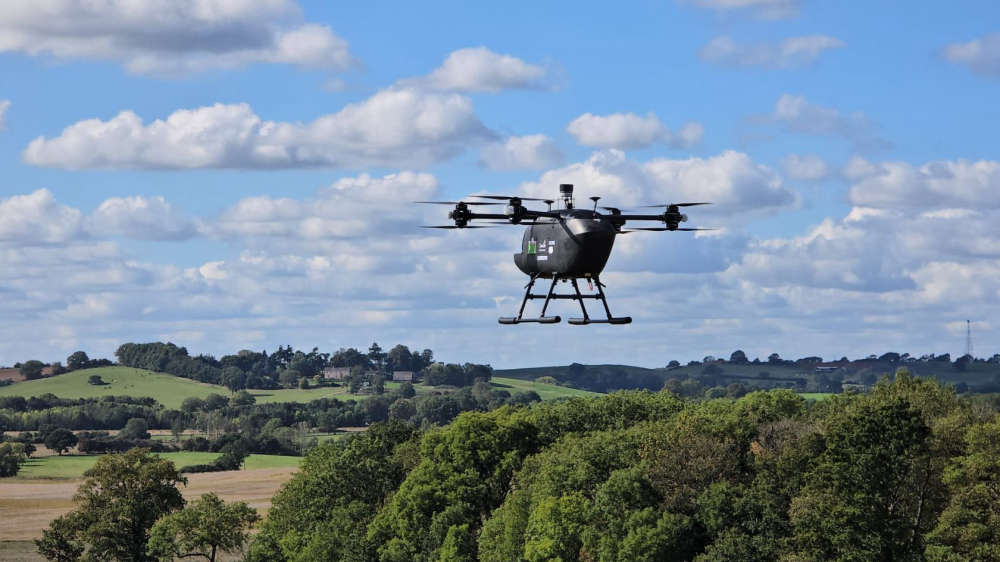
The team has designed the CRANE (Cranfield Rapid Aerial Network for Emergency) - a fully autonomous, remotely piloted quad-rotor electric VTOL aircraft - and successfully conducted test flights of a scaled-down version of the prototype in September.
It’s designed to carry people, supplies and equipment in search and rescue and disaster relief situations, giving first responders access to hazardous or difficult to reach emergencies.
“We are redefining what fast, accessible, life-saving aviation can look like with our remotely piloted aircraft, going beyond the limitations of ground vehicles and helicopters," said Dr Dmitry Ignatyev, Senior Lecturer in Flight Dynamics and Control, who is leading the team.
"Progressing to the next stage of this global competition is great validation of our concept and the hard work of the whole team. We’re proud to be creating technology that makes a real difference.”
The team will now refine the design further, and prepare for a Fly-Off Qualifier round in December 2026, where a full-scale prototype must be demonstrated in flight.
This will secure the team’s entry to Stage Three which is a full-scale build and live flight demonstration in challenging conditions at NASA Ames Research Centre in 2027.